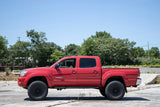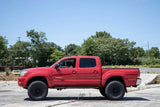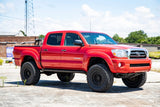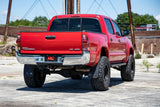


Truck Wheel Offset Guide for Better Fitment

A new set of truck wheels can look perfect in a product photo and still rub a control arm, poke past the fender, or contact the bumper on the first tight turn. That is why a truck wheel offset guide matters before you order wheels and tires. Offset is one of the measurements that decides whether your build looks clean and drives correctly or becomes an expensive fitment problem.
Wheel offset is not just about pushing the wheels outward for a wider stance. It affects clearance at the brakes and suspension, tire room at the fenders and bumper, steering feel, bearing load, and how much trimming or additional suspension work your truck may need. The right number depends on your truck, wheel width, tire size, lift height, and the look you are after.
What Truck Wheel Offset Actually Means
Offset is the distance between the wheel's mounting surface and its centerline, measured in millimeters. The mounting surface is where the wheel contacts the hub. A wheel can have positive, zero, or negative offset.
Positive offset means the mounting surface sits closer to the outside face of the wheel. This pulls the wheel farther inward toward the suspension. Most stock truck wheels use positive offset because manufacturers need predictable steering geometry, fender coverage, and brake clearance.
Zero offset places the mounting surface at the wheel's exact centerline. Compared with a factory positive-offset wheel, a zero-offset wheel usually moves the wheel outward.
Negative offset puts the mounting surface farther toward the back side of the wheel. This moves the wheel face outward, creating the deeper-lip look many truck owners want. It can also create clearance issues if the tire extends too far outside the fender or hits bodywork during turns.
The lower the offset number, the farther outward the wheel moves. For example, a 20x9 wheel with a +18 mm offset sits farther inward than a 20x9 wheel with a 0 mm offset. The same wheel at -12 mm offset sits farther out again.
Offset, Backspacing, and Wheel Width Work Together
A truck wheel offset guide is most useful when you look at offset alongside wheel width and backspacing. Offset alone does not tell the complete fitment story.
Backspacing measures from the wheel mounting surface to the inner edge of the wheel. It is often expressed in inches. More backspacing moves the inner wheel barrel and tire closer to suspension components. Less backspacing moves the wheel and tire outward.
Wheel width changes the equation. A 20x10 wheel at 0 offset will not sit in the same position as a 20x9 wheel at 0 offset. That extra inch of width adds material to both sides of the wheel centerline. In practical terms, a wider wheel can reduce inner clearance and increase outer poke even when the offset number stays the same.
This is why copying a wheel spec from another truck can be risky. Two trucks may have the same wheel diameter and bolt pattern, but different brake packages, suspension designs, trim levels, lifts, or tire sizes. Even the same model can fit differently with stock suspension versus a leveling kit.
How Offset Changes Your Truck's Fitment
The right offset balances the space inside the wheel well with the amount of tire you want outside the body. There is no single best offset for every pickup.
A more positive offset generally keeps the tire tucked closer to the truck. That can be useful for stock-height daily drivers, trucks running factory-style tire sizes, and owners who want minimal spray on the paint and side steps. Too much positive offset, however, can put the tire too close to the upper control arm, sway bar, shocks, or frame.
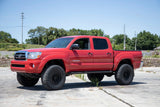
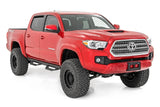
Lower or negative offset creates a broader stance and gives the tire more room on the suspension side. This is common on leveled and lifted trucks running wider all-terrain or mud-terrain tires. The trade-off is outside clearance. A tire that sticks farther out can hit the fender liner, bumper corners, mud flaps, or fender flare at full lock and suspension compression.
Offset also affects steering geometry. Moving the wheel centerline outward changes scrub radius, which can make steering feel heavier or more reactive over rough roads. On a truck used for towing, long highway drives, or daily commuting, pushing the wheels far out just for appearance may not be the right call. A moderate stance often delivers the best mix of looks, drivability, and tire life.
Common Truck Offset Ranges
Exact fitment always comes first, but these ranges help explain what owners typically see on modern half-ton trucks.
Factory wheels often fall into a positive-offset range, commonly around +18 mm to +44 mm depending on wheel width and vehicle. Wheels in the +12 mm to +20 mm range tend to sit slightly wider while retaining a relatively clean, controlled look. Zero offset produces a noticeably wider stance on many trucks, especially with 9- or 10-inch-wide wheels.
Negative offsets such as -12 mm, -18 mm, or lower push the wheel outward more aggressively. They are popular for trucks with larger tires, lifts, wide fender flares, or a deep-dish wheel style. They are not automatically better for off-road use or tire clearance. A very negative wheel may clear an upper control arm but create more contact at the bumper and fender, particularly when the suspension cycles off-road.
If you are choosing between a 9-inch and 10-inch wheel, remember that width may matter as much as the offset number. A 20x10 -18 mm wheel has a dramatically different stance from a 20x9 +18 mm wheel, even though the offset figures are only 36 mm apart.
Start With the Tire, Suspension, and Intended Use
Most fitment decisions start with tire size, not wheel style. A stock truck on 33-inch all-terrain tires has very different needs than a leveled truck on 35s or a lifted truck on 37s. Tire width is equally important. A 35x12.50 tire needs more room than a narrow 35-inch tire, and its shoulder design can change where rubbing occurs.
Before selecting an offset, consider the lift or leveling height, wheel diameter and width, tire size, brake clearance, and whether the truck will see trails, towing, or mostly street driving. These details determine where space is available and where it is not.
A leveling kit can create room above the tire, but it does not automatically solve rubbing at the rear of the wheel well. Larger tires often contact the bumper bracket, liner, or mud flap at steering lock. Changing offset may reduce rubbing on the inside while increasing it on the outside. Sometimes a small amount of trimming is the cleanest solution. Other times, a different wheel width or offset avoids modification altogether.
Do Not Use Wheel Spacers as a Guessing Tool
Wheel spacers can be useful when they are properly sized, hub-centric, and installed with correct hardware and torque procedures. They are not a substitute for planning the wheel package correctly.
Adding a spacer effectively lowers the wheel's offset and moves the wheel outward. A 1-inch spacer changes fitment significantly. It may solve inner suspension clearance, but it can create tire poke, fender contact, or additional stress from an overly aggressive setup.
If you need spacers to make a wheel clear the brakes or suspension, stop and verify the full wheel-and-tire fitment before moving forward. The best setup is one that accounts for the final position of the wheel from the start, including the tire's real-world width and the suspension's full range of motion.
Check Clearance at Full Lock and Full Compression
A truck that clears in the parking lot may still rub on the road. Steering the wheel lock to lock only checks part of the picture. The tire also moves relative to the body as the suspension compresses, especially with uneven pavement, driveways, off-road terrain, or a loaded bed.
Inspect clearance at the upper control arm, sway bar, brake caliper, fender liner, bumper corner, mud flap, and fender edge. Look for shiny marks, torn liner material, or rubbed tire sidewalls. A small rub on plastic may be manageable, but contact with suspension hardware or a sharp metal edge needs attention immediately.
Professional test fitting is valuable when you are investing in wheels, tires, a lift kit, and alignment at the same time. At Audio Jam, the goal is not simply to bolt on a wheel that fits the hub. It is to build a package that clears correctly, drives right, and gives your truck the stance you actually wanted.
Choose a Fitment You Will Still Like Next Season
The most aggressive offset on the rack is not always the best choice for your truck. Think about how the truck is used, how much road spray you are willing to deal with, whether you plan to go bigger on tires later, and how much trimming you want to accept. A well-matched wheel offset makes the whole build look intentional - and lets you enjoy the truck instead of listening for rub every time you turn into a parking lot.