

Truck Suspension Upgrade Examples That Work

A suspension upgrade should solve a real problem, not just add height. The best truck suspension upgrade examples start with how you use the truck: clearing larger tires, controlling a loaded trailer, improving a rough ride, or getting more wheel travel off-road. A setup that looks right in a parking lot can still ride poorly, wear tires early, or handle badly if the parts do not match the truck and the job.
For Delaware truck owners, that usually means considering more than weekend trail use. Potholes, wet roads, salt exposure, work trailers, boats, campers, and daily commuting all put different demands on a suspension. Start with the result you want, then build the system around it.
Truck Suspension Upgrade Examples by Goal
Leveling kit for a cleaner stance and tire clearance
Most late-model pickups sit lower in the front from the factory. That rake helps when the bed is loaded, but it can leave the truck looking nose-down when it is empty. A front leveling kit raises the front end enough to bring it closer to the rear ride height.
This is one of the most common upgrades for an owner who wants a more balanced stance and room for moderately larger tires. Depending on the truck, a leveling setup may use strut spacers, replacement struts, torsion-key adjustments, or coil spring components. The right choice depends on the factory suspension design.
The trade-off is simple: lifting the front changes suspension angles. A basic spacer can be an affordable solution, but it does not automatically improve damping or ride control. On trucks that see rough roads, higher-mileage factory shocks, or heavier wheels and tires, upgraded struts or shocks are usually the better long-term move. An alignment is required after installation, and tire clearance should be checked at full steering lock and full suspension compression, not only while parked.
Lift kit with matched shocks for larger tires
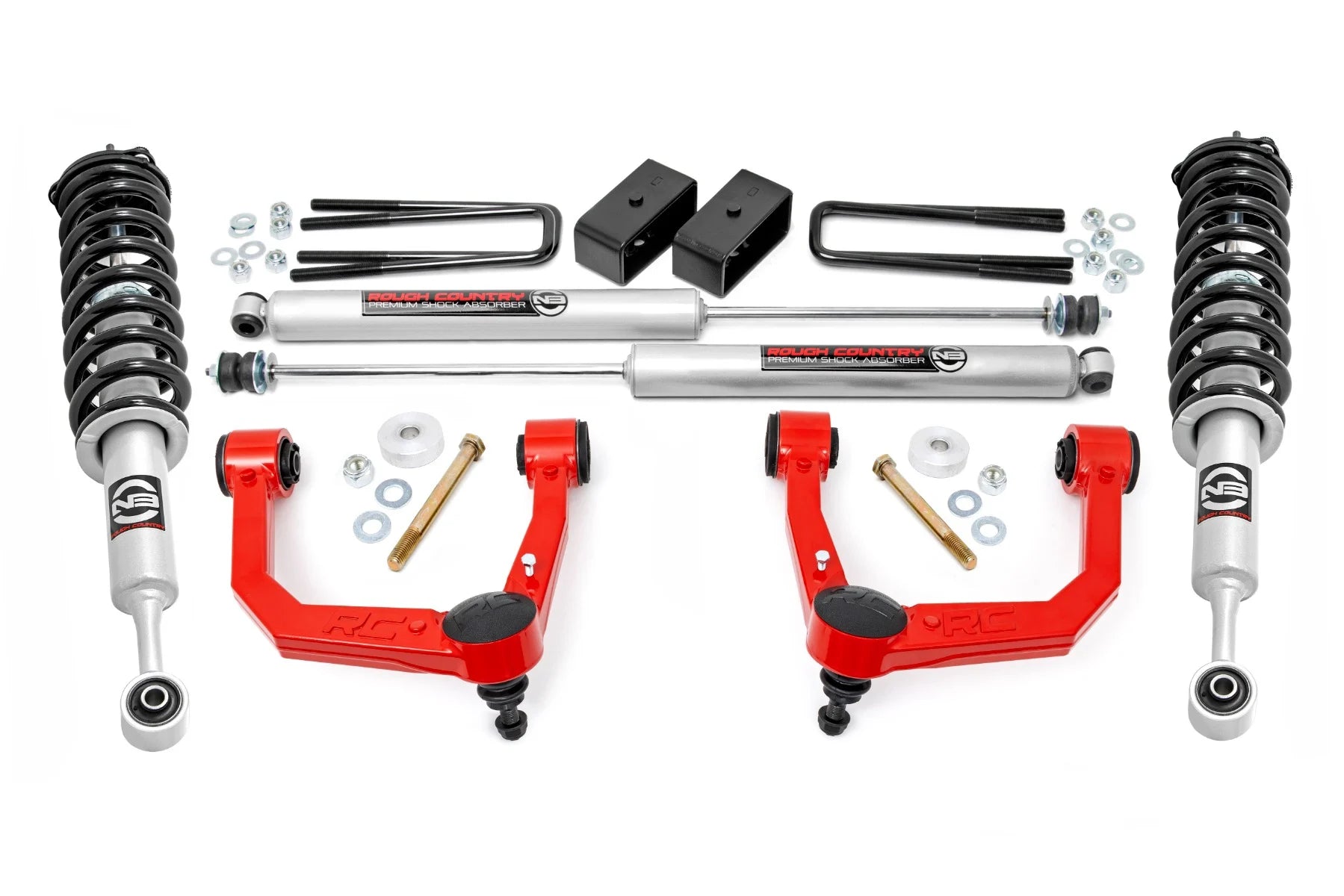
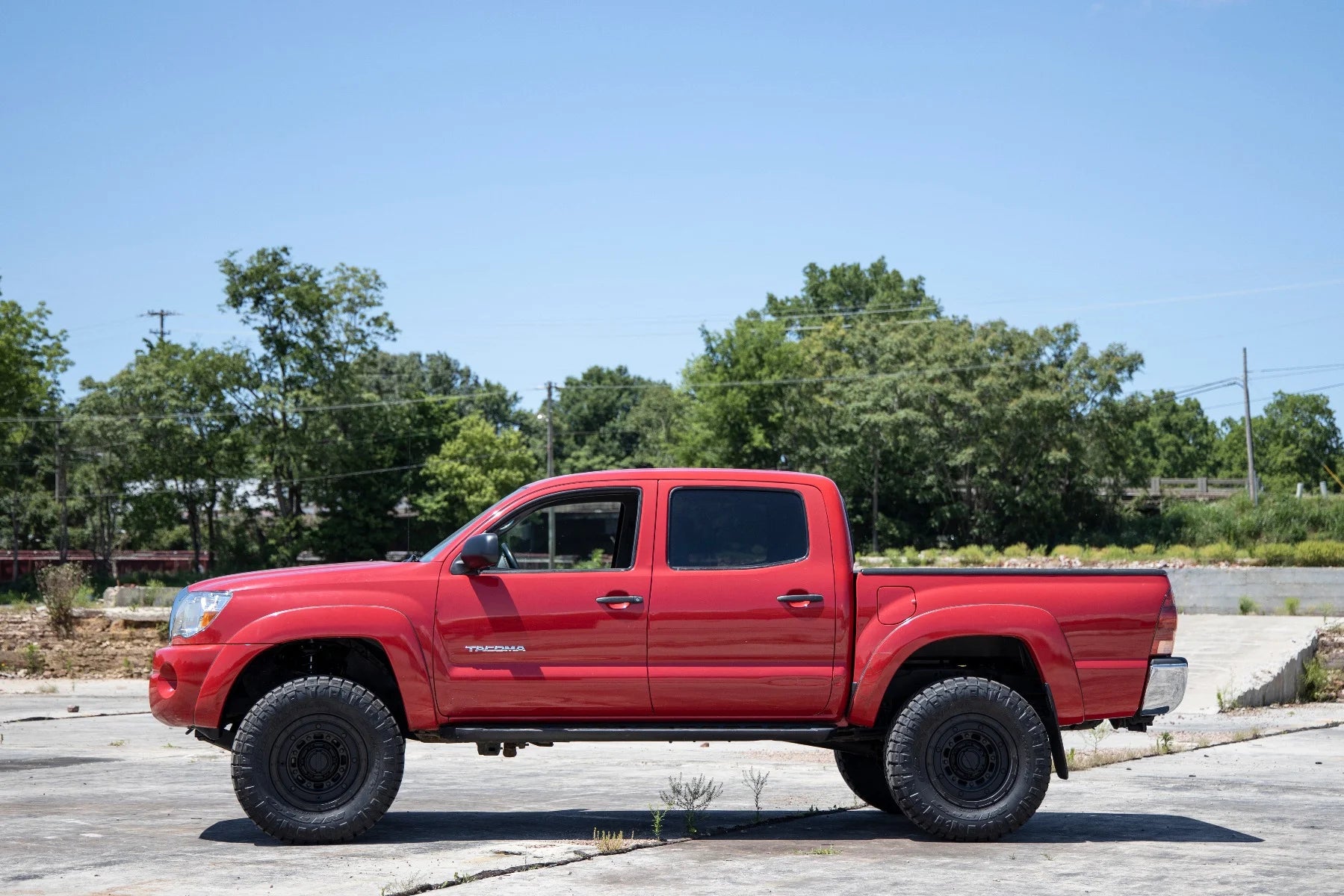
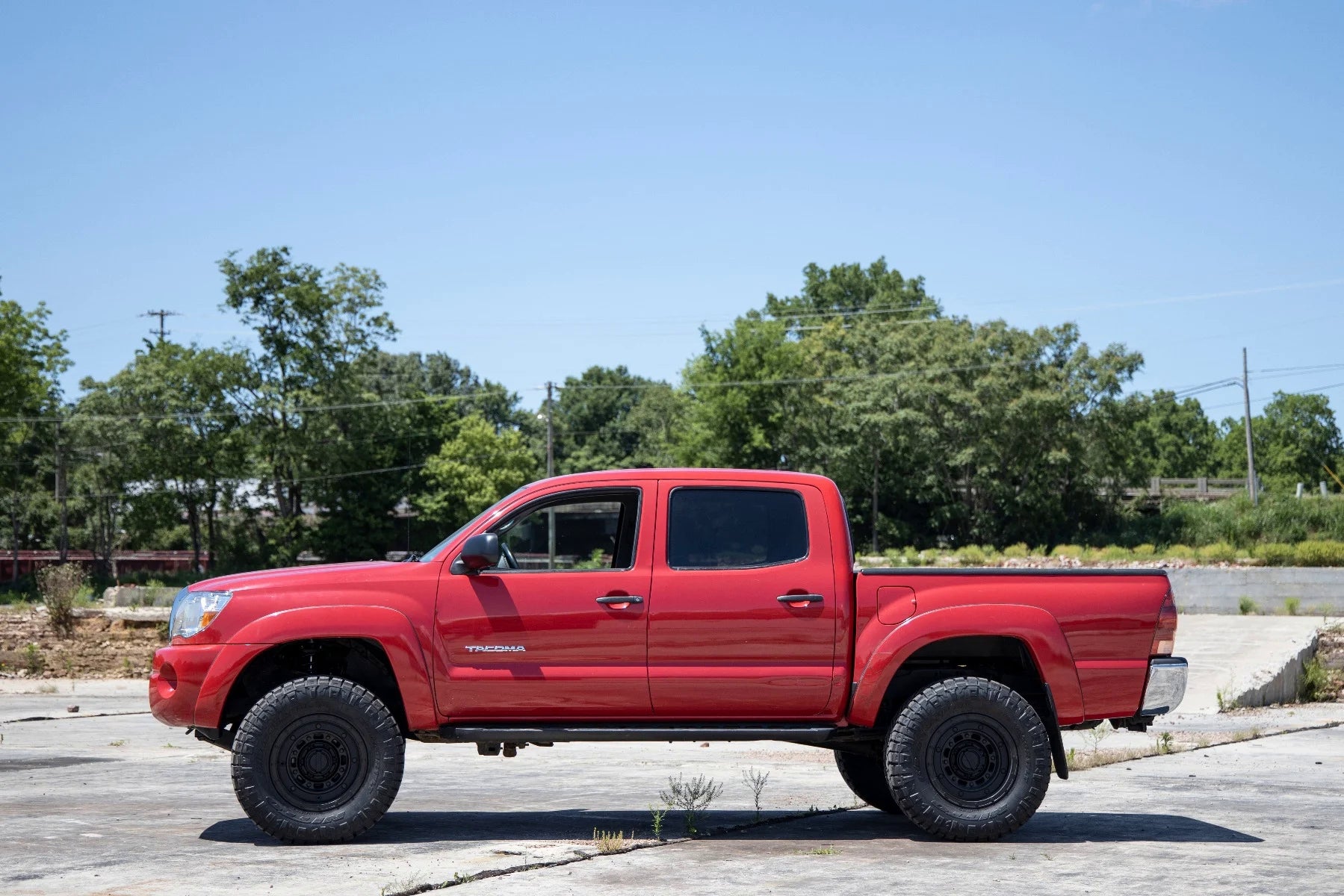
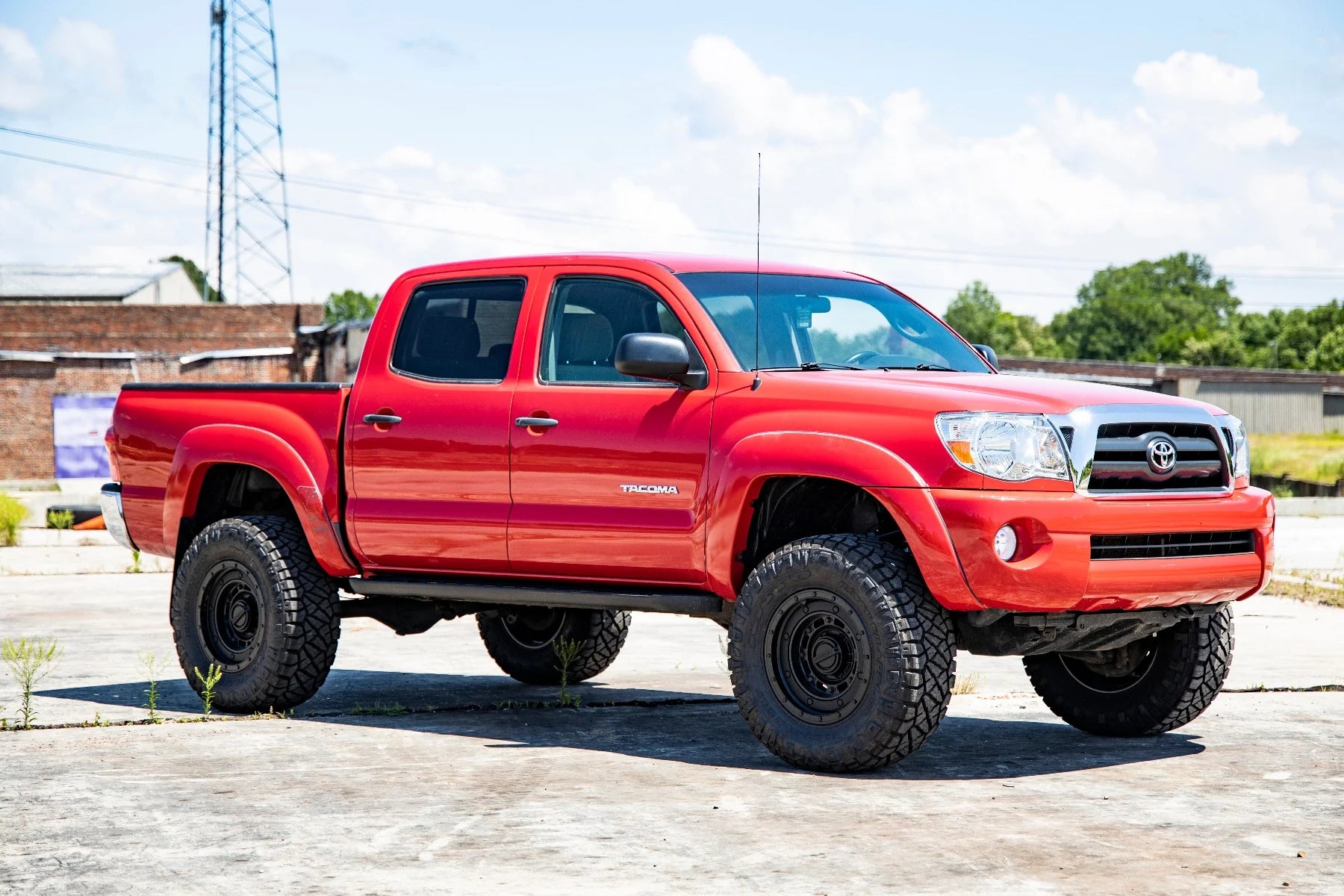
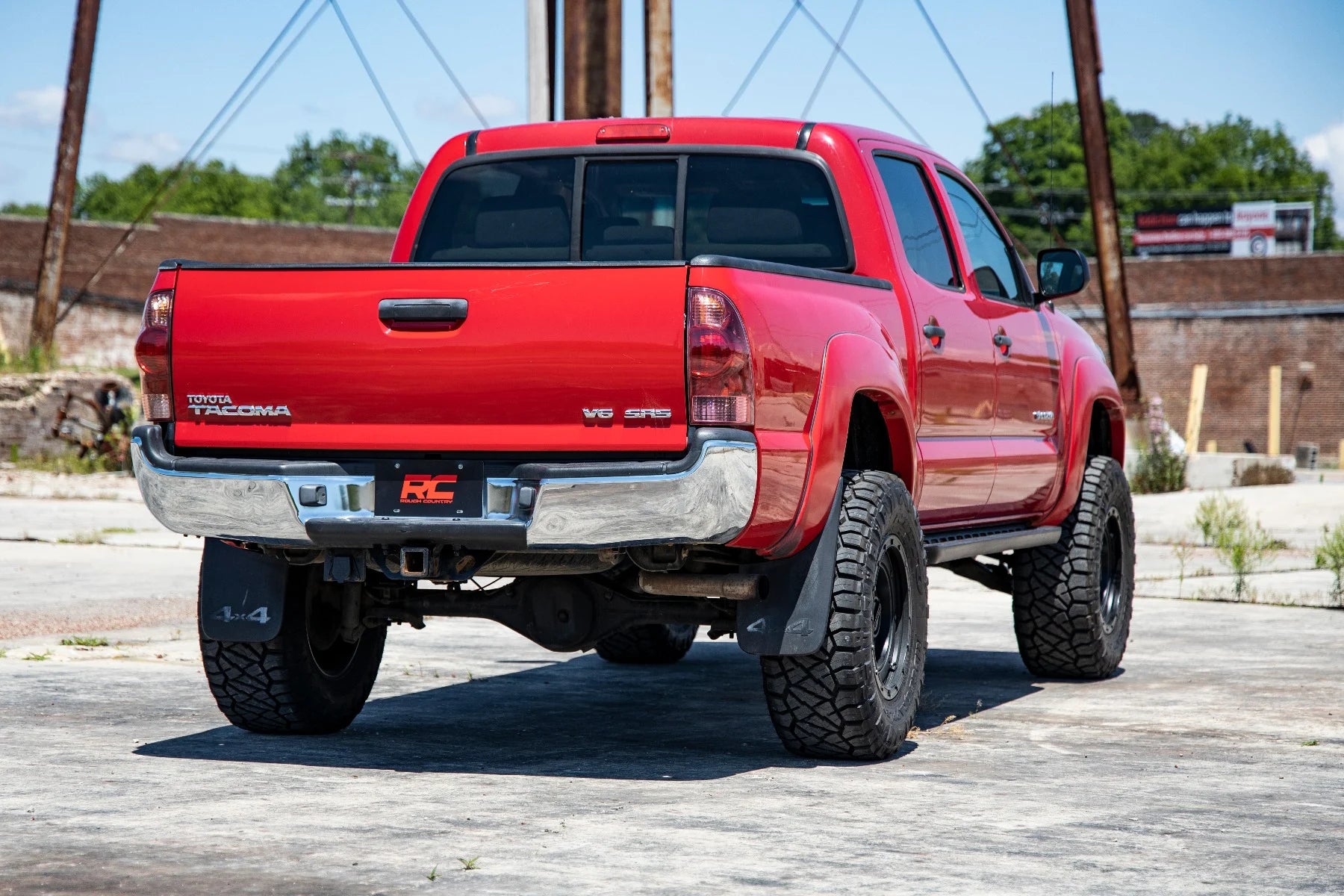
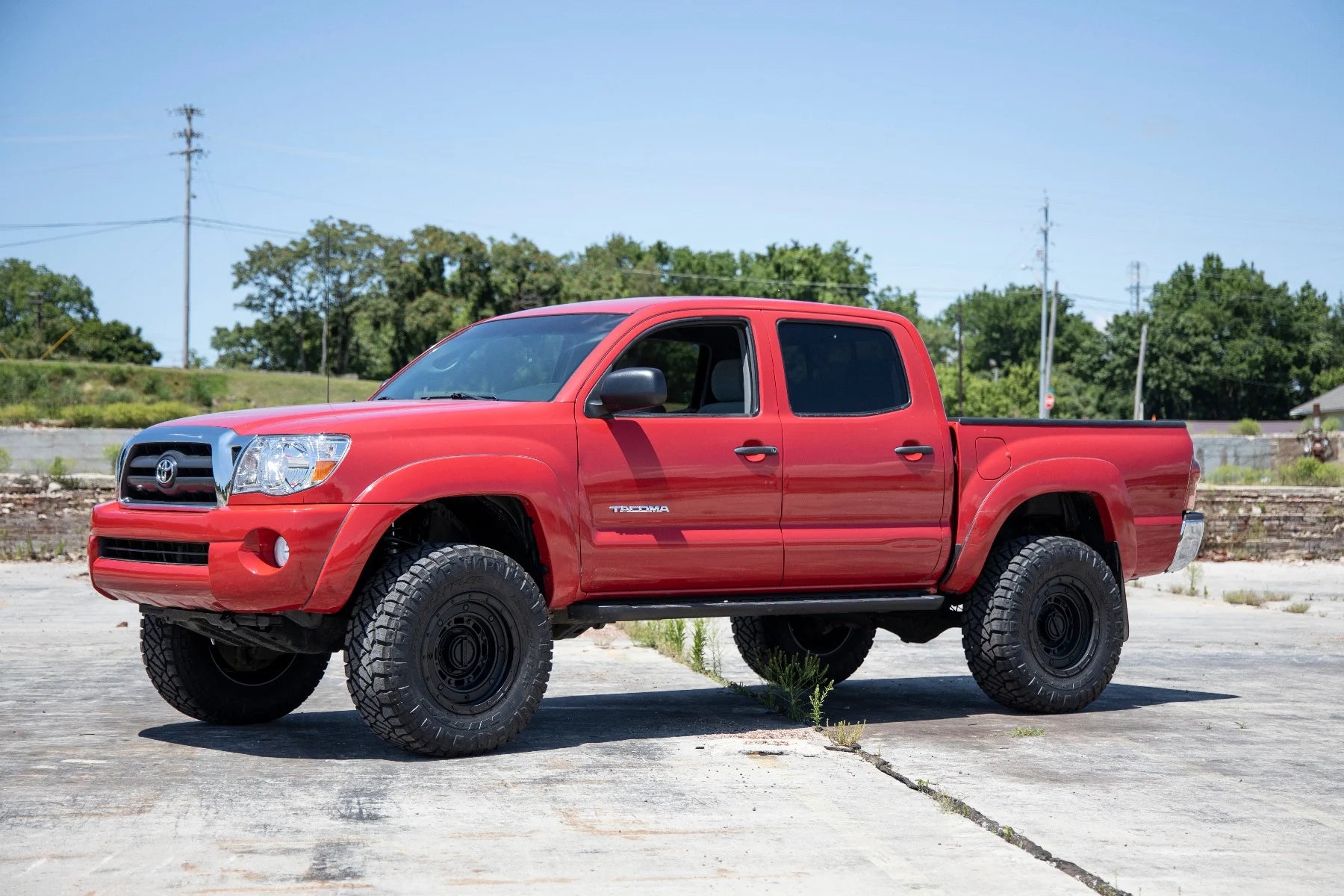
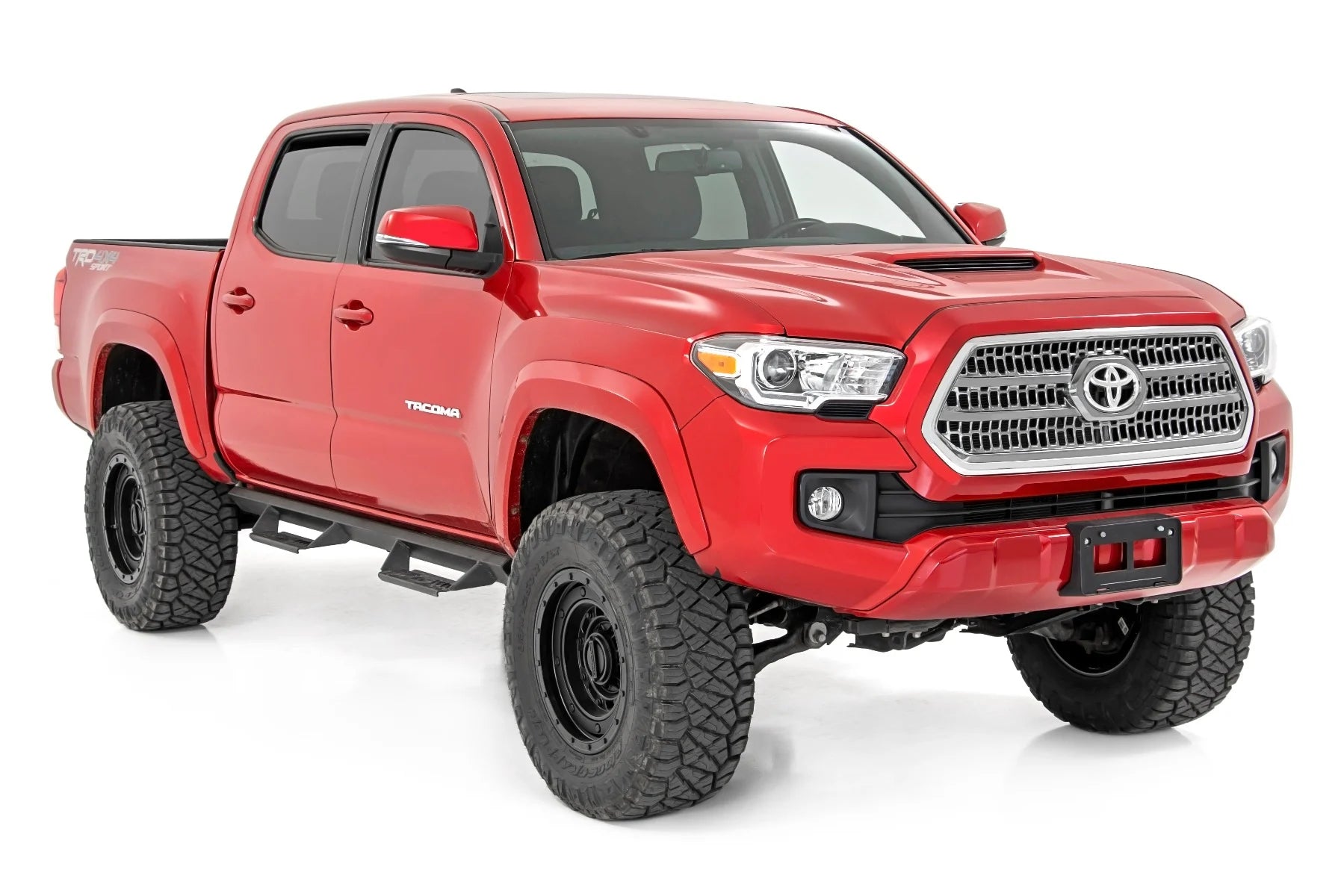
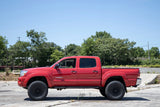
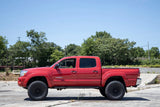
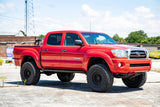
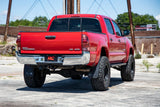
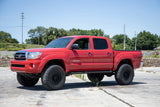
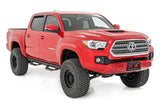
A suspension lift is for the truck owner who needs more than a level stance. A properly designed lift kit can create room for larger tires, increase ground clearance under the body, and give the truck a more capable off-road profile. Common lift heights range from about two to six inches, though the right number depends on tire size, wheel offset, and the truck's intended use.
The important distinction is between a complete suspension system and a collection of parts. A complete kit may include brackets, crossmembers, springs, shocks or struts, steering corrections, and hardware designed to keep the geometry in a workable range. That matters when you want the truck to track straight, brake predictably, and avoid unnecessary stress on ball joints, CV axles, and steering components.
Larger lifts are not automatically better. More height can raise the center of gravity, make entry harder, affect towing behavior, and require additional upgrades such as driveline corrections or upgraded control arms. If your truck is primarily a daily driver that occasionally sees a dirt road or hunting property, a modest lift with quality shocks often makes more sense than chasing maximum height.
Heavy-duty shocks for towing and hauling
Not every suspension upgrade includes a lift kit. If the truck squats with a trailer, bounces over bridge joints, or feels unsettled with cargo in the bed, upgraded shocks can make a noticeable difference. Quality monotube shocks, adjustable shocks, or towing-focused dampers can control body movement better than worn factory units.
Shocks do not increase payload rating, and they cannot fix overloaded leaf springs. What they do is control the spring movement that causes porpoising, wallowing, and repeated bouncing after a bump. That can make a loaded truck feel more composed and reduce driver fatigue on longer trips.
For owners who tow regularly, shocks are often paired with helper springs, add-a-leaf kits, air springs, or upgraded rear leaf packs. Each option handles weight differently. Helper springs provide added support as the load increases. Air springs are adjustable and useful when trailer tongue weight varies. A heavier leaf pack is more permanent, but may make an unloaded truck ride firmer. The right answer depends on how often the truck carries weight and whether it also needs to remain comfortable empty.
Air springs for variable loads
Air spring systems are a practical suspension upgrade for a truck that works during the week and tows on the weekend. By adding adjustable air pressure at the rear, they can help level the truck under a trailer or heavy bed load. Keeping the truck level supports better headlight aim and can improve overall towing stability.
They are not a replacement for proper weight distribution, trailer setup, or staying within the truck's rated limits. Air springs should support a correctly loaded truck, not mask an overload condition. They also need periodic inspection for leaks, line routing, and bracket security. Adding an onboard compressor makes adjustment easier, but it adds cost and more components to maintain.
Performance coilovers for ride quality and control
For trucks with independent front suspension, adjustable coilovers can be a strong option when you want mild lift and improved front-end control in one package. They replace the factory coil spring and shock arrangement with an assembly designed for specific ride height and damping characteristics.
A quality coilover setup can improve response on washboard roads, reduce harsh bottom-outs, and provide a more controlled feel with larger tires. Some systems allow preload or ride-height adjustment, while others offer external damping adjustment. More adjustment is useful only if it is set correctly. A poorly adjusted performance suspension can ride worse than a simpler setup chosen for the actual vehicle weight.
Coilovers are especially worth considering for trucks that see frequent gravel roads, beach driving, trail use, or fast-changing road surfaces. Pairing them with rear shocks designed to complement the front setup helps keep the truck balanced instead of making one end feel overly stiff or loose.
Control arms and long-travel upgrades for serious off-road use
When a truck is lifted beyond a mild level, aftermarket upper control arms may be needed to restore alignment range and improve ball joint or uniball angles. They are not always required, but on certain applications they are a smart supporting upgrade rather than an optional appearance part.
For dedicated off-road builds, long-travel systems go further by increasing usable wheel travel and changing suspension geometry. These setups can include wider control arms, extended axles, specialized shocks, and reinforced mounting points. They are built for a specific type of use, not for every truck owner.
The trade-offs include cost, maintenance, tire fitment, and possible changes to on-road feel. If the truck spends most of its time commuting through Newark or Wilmington, a well-matched moderate lift will usually be easier to live with than a race-inspired suspension build.
What to Check Before Choosing a Suspension Upgrade
Before ordering parts, confirm the truck's year, trim, drivetrain, cab and bed configuration, current tire size, and factory suspension package. A kit that fits a two-wheel-drive model may not fit a four-wheel-drive version, and diesel, hybrid, and off-road trims can have different front-end weights or component layouts.
Also consider these five practical questions:
- Will the truck tow, haul, or carry a slide-in camper?
- Are larger tires part of the plan now or later?
- Is ride comfort more important than maximum lift height?
- Will it see trails, mud, sand, or mainly paved roads?
- What supporting work is needed, including alignment, wheels, brake-line clearance, and recalibration?
Installation Matters as Much as the Parts
Suspension work affects steering, braking behavior, tire wear, and driveline angles. That is why professional installation is more than bolting parts onto a truck. The job should include correct torque procedures, component inspection, ride-height verification, alignment, and a road check. On lifted trucks, details such as sway-bar position, ABS wiring, shock travel, bump-stop clearance, and CV angles deserve attention.
Audio Jam can help truck owners in Bear and the surrounding area choose a lift, leveling, shock, wheel, and tire combination that fits the truck instead of forcing the truck to fit the parts. The goal is a build that looks right, drives right, and stays useful after the newness wears off.
Choose the suspension around the miles your truck will actually travel. A smart, properly installed upgrade should make every drive feel more controlled, whether the truck is headed to a jobsite, pulling a trailer, or turning onto the trail.