

Is Window Tinting Worth It? a Practical Guide for Drivers

You climb into the car after work, pull your hand off the hot steering wheel, and wait for the air conditioning to catch up. Tint suddenly sounds less like a styling upgrade and more like something you'd use every day. Is window tinting worth it? Yes, when you buy documented solar performance and a legal installation, not just darker windows.
Table of Contents
- Why Drivers Ask Whether Tinting Is Worth the Money
- How Window Film Actually Works on Your Glass
- What the Measured UV and Heat Numbers Actually Show
- Why a Darker Film Is Not Automatically a Better Film
- Delaware and Federal Visibility Rules You Must Know
- Who Tinting Is Really Worth It For
- A Pre-Install Checklist That Protects Your Investment
- The Bottom Line on Whether Window Tinting Is Worth It
Why Drivers Ask Whether Tinting Is Worth the Money
Most drivers don't start shopping for tint because they've studied film specifications. They start because afternoon sunlight hits their face during the commute, their passengers complain about the sun, or they want more privacy without changing the vehicle itself.
Those are reasonable goals. The mistake is treating them as the same problem and assuming the darkest available film solves all of them.
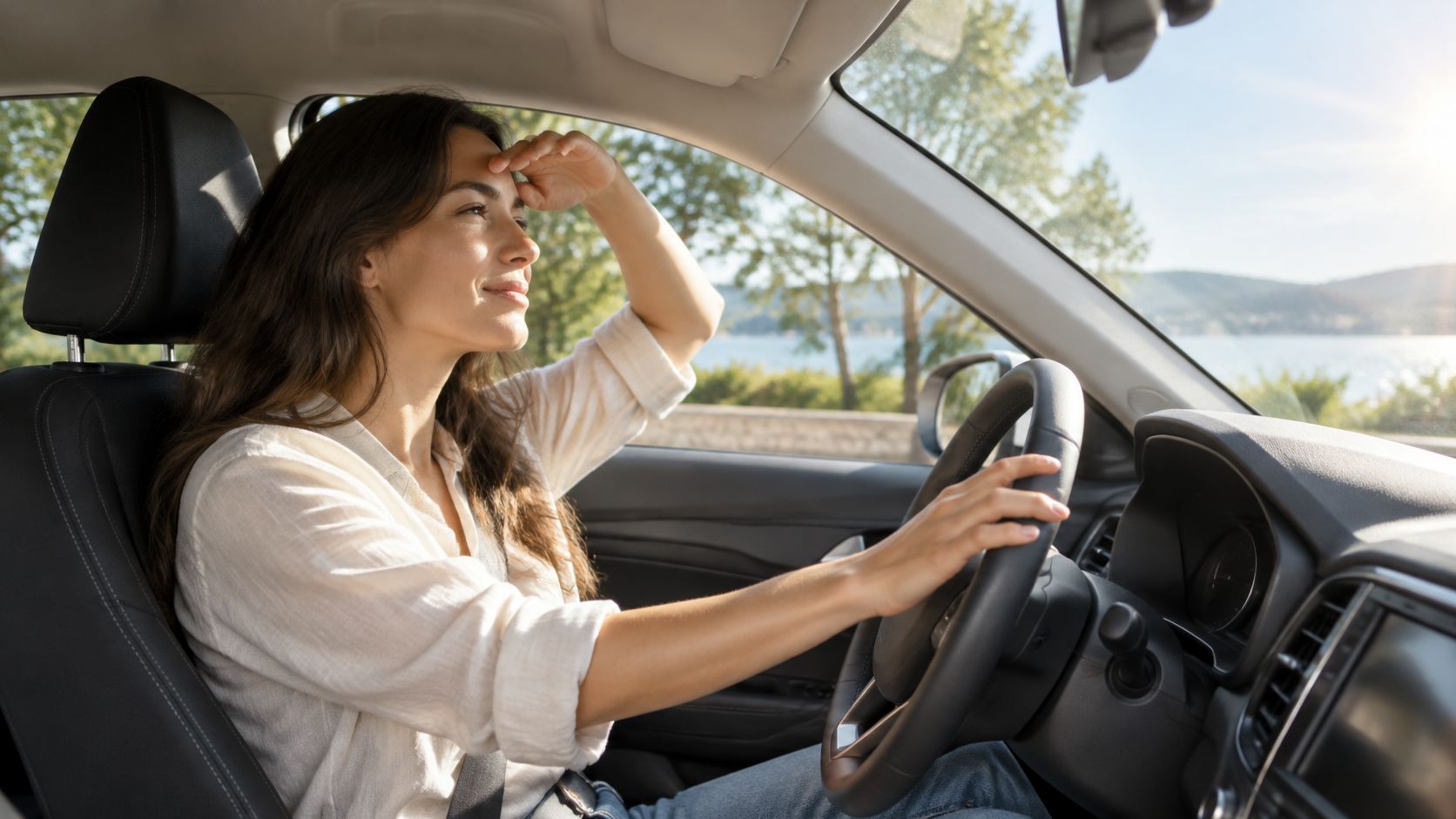
Start by describing what bothers you, where it happens, and when you drive. A commuter fighting side-window sunshine needs a different conversation from someone mainly interested in rear-seat privacy. If you regularly drive home after dark, nighttime visibility belongs in the purchase decision from the beginning.
Buy for Your Routine
- Identify the irritation. Separate glare, direct solar heat, privacy, and appearance rather than asking for a shade immediately.
- Describe your parking. Tell the installer whether the car spends the workday outside or mostly stays sheltered.
- Set your boundaries. Legal compliance and clear nighttime vision shouldn't be bargaining chips.
For drivers around Bear and the surrounding Delaware corridor, local requirements matter as much as the film selection. My recommendation is to decide what improvement you want before discussing price. Tint is worthwhile when it fixes a recurring problem without creating a visibility or compliance problem. If your only requirement is that it look extremely dark, reconsider the purchase.
How Window Film Actually Works on Your Glass
Window film changes how sunlight passes through your vehicle's glazing. To compare products intelligently, separate the visible light you see from the solar energy you feel. They're related parts of sunlight, but they aren't interchangeable purchasing metrics.
Visible-light transmittance, or VLT, describes how much visible light passes through. A film has its own rated VLT, while the completed window has a combined result from the factory glass and the applied film. Think of VLT as the sunglasses comparison: it tells you about light transmission, not the whole protection story.
Read the Whole Specification Sheet
| Metric | What it describes | What to ask the installer |
|---|---|---|
| VLT | Visible light passing through | Is this the film rating or the finished-window result? |
| Near-infrared transmittance | Near-infrared solar radiation passing through | What documented performance does this exact film provide? |
| Total solar-energy rejection | Rejection across the solar-energy spectrum | How does it compare with another film at a similar shade? |
Near-infrared transmittance concerns a portion of sunlight that contributes to cabin heat. It isn't a measurement of every source of heat entering the vehicle. Total solar-energy rejection gives you a broader basis for discussing solar performance.
Buying rule: Treat shade as one specification, not the product's entire job description.
Ask whether quoted figures describe film alone or film tested on a particular glass assembly. You want comparable documentation, not competing sales phrases. An installer should be able to explain what each rating means without substituting a brand name for an answer.
What the Measured UV and Heat Numbers Actually Show
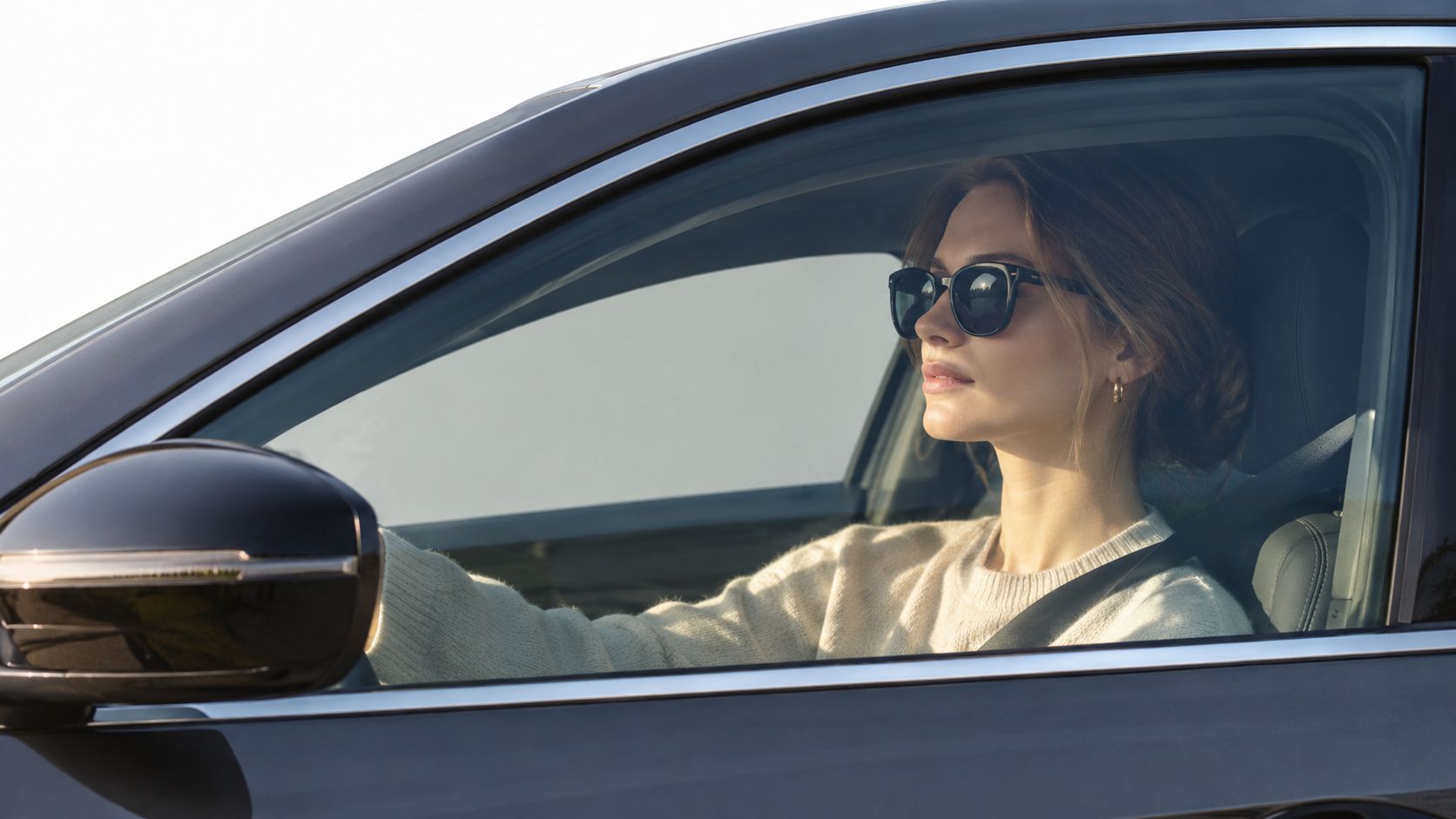
Take tint seriously for one reason: the cabin is a UV exposure environment, and film has measured effects there. The evidence supports lower ultraviolet exposure for occupants, while still leaving room for differences in glass, coverage, driving time, and how a given car was tested.
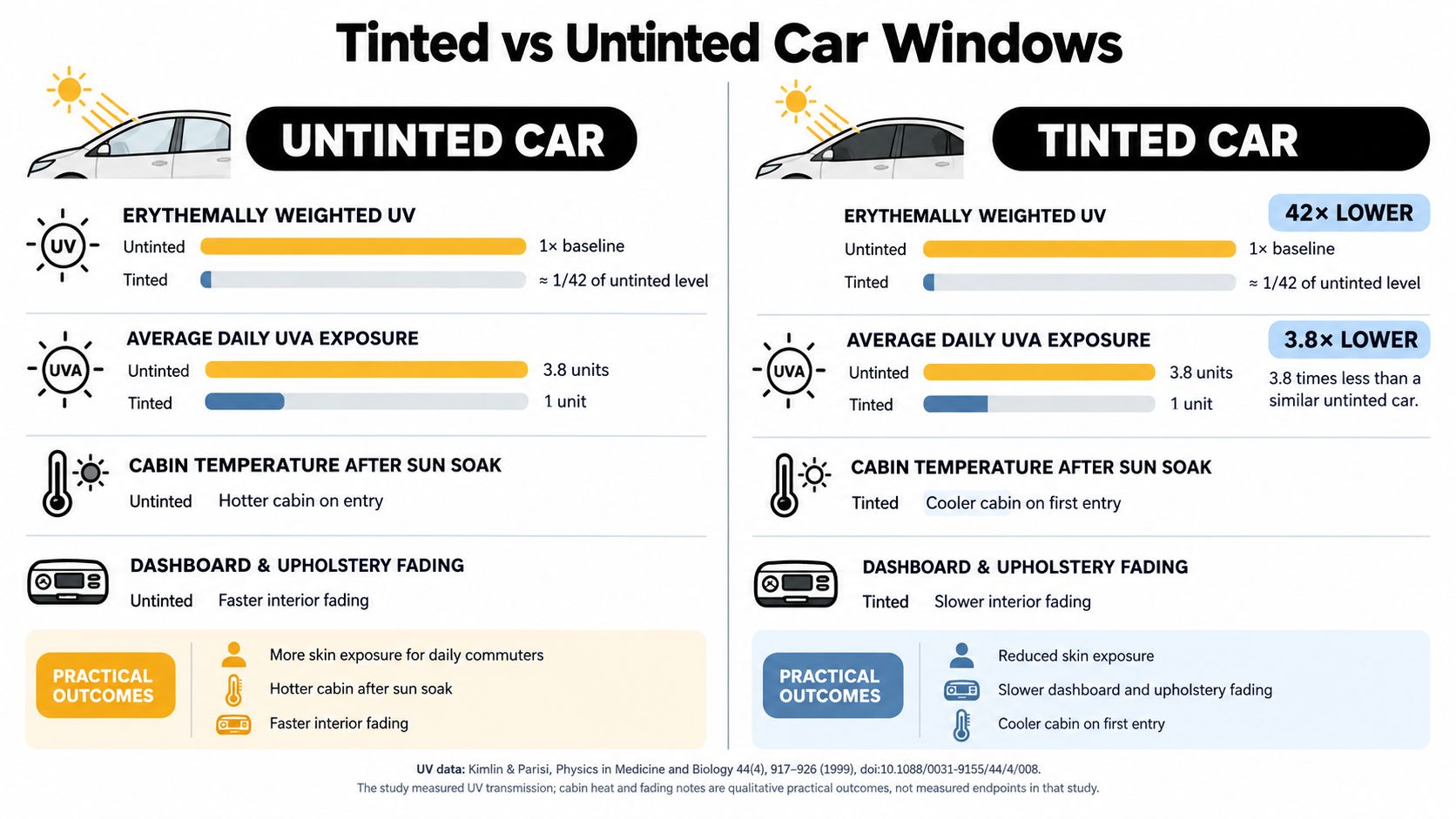
In a 1999 field comparison, otherwise identical cars were tested with their windows closed, with aftermarket tint covering every window except the windshield in the treated car. That vehicle recorded erythemally weighted UV at about 1/42 of the untinted vehicle's level; broader testing found average daily UVA exposure inside a tinted car about 3.8 times lower than in a similar untinted car, as documented in the automotive ultraviolet-exposure field study.
Read UV Claims and Heat Claims Separately
Erythemally weighted UV tracks the radiation tied to sunburn. UVA is a different exposure measure, so keep the findings separate rather than blending them into one promise for your car.
For a driver with long seat time, lower incoming UV is a practical benefit. It also means less ultraviolet radiation reaches exposed interior surfaces, which supports fading protection without giving you a guaranteed lifespan for a dashboard, seat, or trim piece.
Aim for reduced exposure. Treat absolute claims as sales talk.
Vehicle design changes the result. Glass type, window orientation, cabin dimensions, and film coverage all affect how much radiation reaches the person inside.
My shop-floor rule: a shade number answers appearance, glare feel, and Delaware VLT questions; UV and heat need their own measurements. That gap is why the film label and the finished glass-and-film assembly deserve separate questions. Ask for solar-performance documentation when heat is the problem, and reject promised temperature drops, fuel savings, or upholstery timelines built only on a UV study.
Why a Darker Film Is Not Automatically a Better Film
I wouldn't recommend choosing tint from a shade display alone. Looking through a sample helps you judge appearance, but it doesn't establish how effectively the material controls incoming solar energy.
A technical comparison of automotive window films found samples with similar visible-light performance but substantially different near-infrared transmittance: approximately 60–70% for one film versus 10–20% for the other. That's a meaningful difference in the measured near-infrared band despite comparable visible-light performance, not a guaranteed difference in cabin temperature.
Compare Equivalent Products
When a shop quotes a higher-priced film, ask what documented performance you're buying. A meaningful explanation should connect the exact film to your comfort goal, rather than suggest that a premium name automatically justifies the difference.
- Match the visible appearance. Compare candidates at similar VLT before deciding which offers more useful solar control.
- Request the supporting figures. Look for documented near-infrared performance and total solar-energy rejection.
- Question broad infrared claims. Ask what the rating measures and whether the competing products were evaluated on the same basis.
My preference is a film with strong documented solar performance at a shade that suits the window's legal and practical limits. That's a better buying strategy than choosing a dark product and hoping comfort follows.
Don't turn the infrared comparison into an exaggerated sales claim. Near-infrared transmission isn't total heat admission, and the vehicle's existing glass still matters. Pay for the performance you can substantiate, not an impressive-sounding multiplier or a demonstration that nobody can explain.
Delaware and Federal Visibility Rules You Must Know
Legal fit comes before shade preference. Federal Motor Vehicle Safety Standard No. 205 has required at least 70% visible-light transmittance in areas needed for driving visibility since 1968, according to the NHTSA interpretation of automotive glazing requirements. That interpretation also distinguishes passenger cars from trucks, buses, and multipurpose passenger vehicles, where the federal coverage focuses on the windshield and front side windows.
For Delaware installations, the cited requirements call for at least 70% combined visible-light transmission on the front side windows and limit windshield film to a transparent upper strip that doesn't extend below the AS-1 area. Check the applicable requirements and documentation provisions in Delaware's motor-vehicle window-tint law before authorizing work, because legislative changes and enforcement details can make older online advice unreliable.
The video below is supplementary viewing, not a substitute for checking the applicable rules.
Require a Reading on the Completed Window
A film label doesn't establish that an installed window complies. Factory glass and existing coatings affect the completed assembly, which is why a professional should check it with a calibrated tint meter.
- Confirm the vehicle category. Don't assume a passenger-car explanation settles every window on an SUV or truck.
- Inspect the windshield boundary. Ask the installer to identify the permitted upper area before applying film.
- Get the final measurement. A verbal assurance based only on the roll label isn't enough.
Reducing visible transmission also reduces the light available for driving tasks. Nighttime, rain, and poorly lit parking areas deserve particular attention. I wouldn't trade usable sight lines for a preferred look, even where a darker rear-window option is permitted.
Who Tinting Is Really Worth It For
Sun-exposed commuters are my clearest recommendation. If direct sunlight makes a regular trip uncomfortable, you have a recurring problem against which to judge the purchase. Drivers who park outdoors should also consider solar-control film, while keeping expectations grounded: tint isn't refrigeration, and a parked car can still become hot.
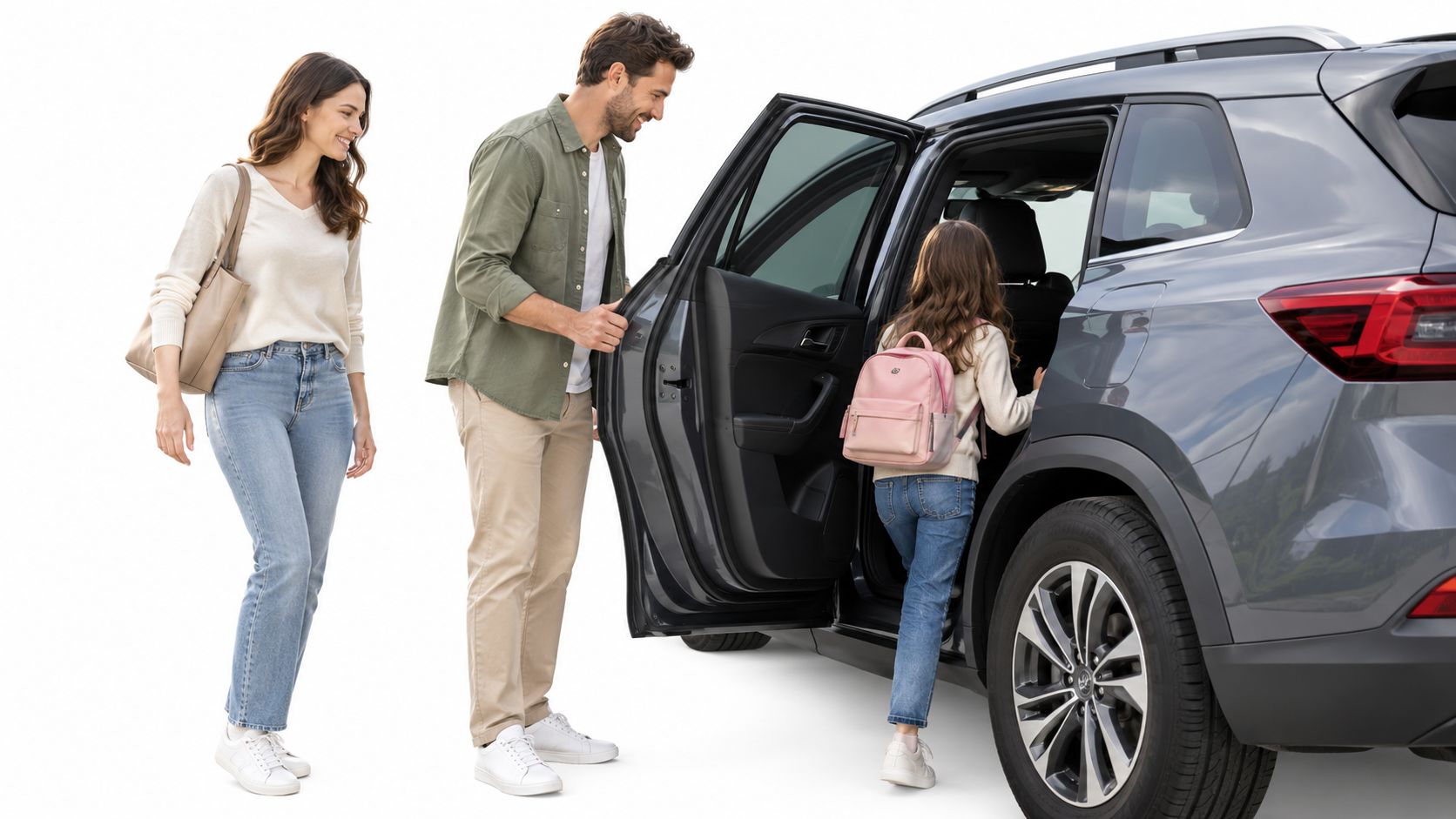
Families may value rear-seat solar control and privacy. Privacy-focused drivers should decide which windows need treatment instead of assuming the entire vehicle needs the same appearance.
When I'd Recommend Passing
| Your situation | My recommendation |
|---|---|
| Frequent direct-sun discomfort | Compare documented solar-control options |
| Mostly sheltered parking and little daytime driving | Wait unless there's another clear need |
| A leased vehicle | Check the lease and return requirements first |
| A near-term sale | Prioritize buyer acceptance and compliance over personal styling |
For resale-conscious owners, I wouldn't buy tint expecting a guaranteed increase in vehicle value. Treat it as a comfort purchase, and consider whether a future buyer might prefer removal. On a used vehicle with existing tint, inspect what's already installed before paying to add anything.
Medical needs require a separate administrative step. Delaware requires aftermarket material to meet the applicable standard and a manufacturer certificate to be displayed; a medical exception requires an approved tint waiver, not merely an informal physician recommendation, as explained in the Delaware DMV medical-tint waiver guidance.
Ownership advice: If you won't keep the documentation, you're leaving part of the installation unfinished.
A Pre-Install Checklist That Protects Your Investment
Bring questions to the appointment, not just a preferred shade. The useful quote identifies what the shop will install, how it will verify the result, and what paperwork you'll leave with.
Put the Scope in Writing
- Record the starting condition. Have the installer identify existing film, factory privacy glass, and relevant coatings before recommending additional material.
- Specify the film. Request the exact product and its data sheet, including VLT, infrared performance, and total solar-energy rejection.
- Agree on verification. Ask for calibrated-meter testing of the finished glass and a record of the result.
- Collect the documents. Retain the manufacturer certification, invoice, installation details, and warranty terms together.
- Look at the workspace. Ask how the shop prepares the glass and controls contamination during application.
- Clarify aftercare. Get product-specific instructions and know whom to contact if you notice an installation concern.
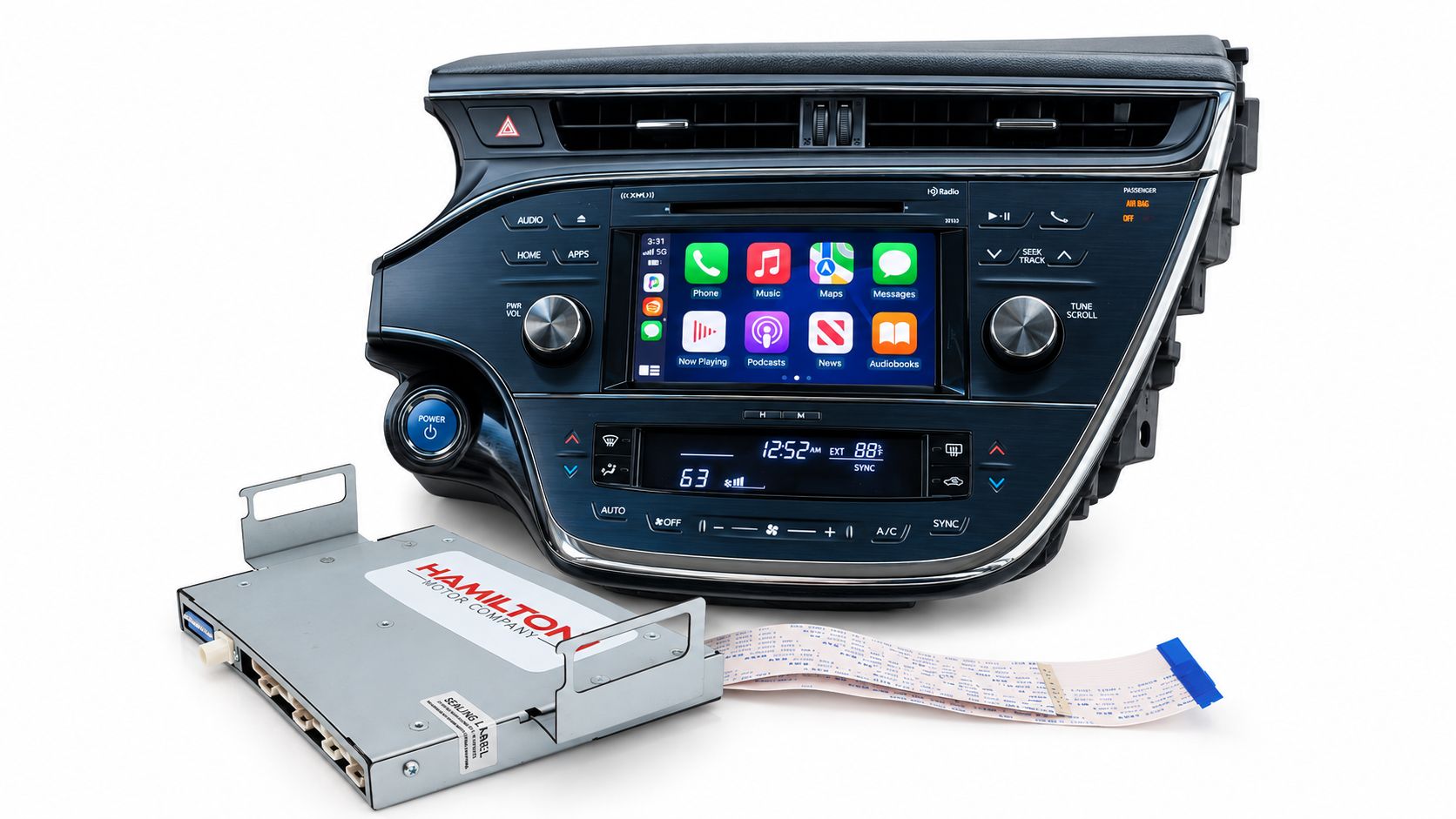
If you're combining tint with an infotainment project, keep the scopes separate. For example, the Apple CarPlay Stereo Upgrade for 2014–2018 Toyota Avalon adds wired and wireless CarPlay and Android Auto through the factory display. Its vehicle-integration requirements are a separate conversation from the tint's optical and legal requirements.
Don't approve an undefined package. Whether you're buying tint alone or coordinating several upgrades, you should know exactly what work is included and how the installer will confirm completion.
The Bottom Line on Whether Window Tinting Is Worth It
Window tinting is worth it when you regularly need solar comfort, UV reduction, or permitted privacy and can get those benefits without sacrificing visibility. It's less compelling for a mostly garage-kept vehicle with little sun exposure, or for an owner who hasn't checked lease restrictions.
Don't build the decision around hoped-for fuel savings or a higher resale price. Without vehicle-specific evidence, I wouldn't count either as money recovered. Judge the purchase by the daily problem it solves and include possible removal, inspection, and compliance complications in your thinking.
Choose the lightest legally suitable appearance that delivers the documented performance you need.
For Delaware drivers, the decisive difference isn't premium film versus inexpensive film. It's a clearly specified, verified installation versus an assumption based on a label. Ask the installer to explain the selection, document the work, and demonstrate the finished result.
If those questions get straightforward answers, you have a sound basis for buying. If the conversation never gets beyond darkness and appearance, keep shopping.
Audio Jam Inc offers professional window tinting from its Bear showroom, along with car audio, remote start, and safety upgrades. Visit Audio Jam Inc with your vehicle and your comfort concerns, and ask the team to discuss film specifications, current Delaware requirements, and finished-window verification before you choose a shade.