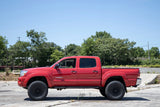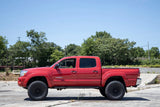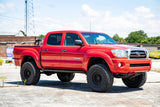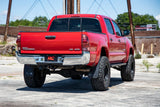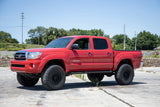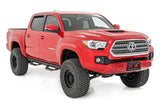


Jeep Suspension Upgrade Example: A Smart Build

A Jeep that sits higher but wanders across the highway, rides harsh, or rubs tires at full lock is not a finished build. This Jeep suspension upgrade example focuses on what a well-planned setup should deliver: useful ground clearance, room for larger tires, confident road manners, and suspension travel that helps when the trail gets uneven.
The right answer depends on your Jeep model, tire goal, driving habits, and how often it sees dirt. A weekend trail Jeep can accept more compromise than a daily-driven Wrangler that handles Delaware back roads, commutes, and family trips. The goal is not simply to add lift. It is to make every part of the suspension work together.
A Jeep Suspension Upgrade Example for 35-Inch Tires
Consider a four-door Jeep Wrangler that serves as a daily driver but gets used for beach access, wooded trails, and occasional rock obstacles. The owner wants to move from factory tires to 35-inch all-terrains without turning the Jeep into a noisy, twitchy project.
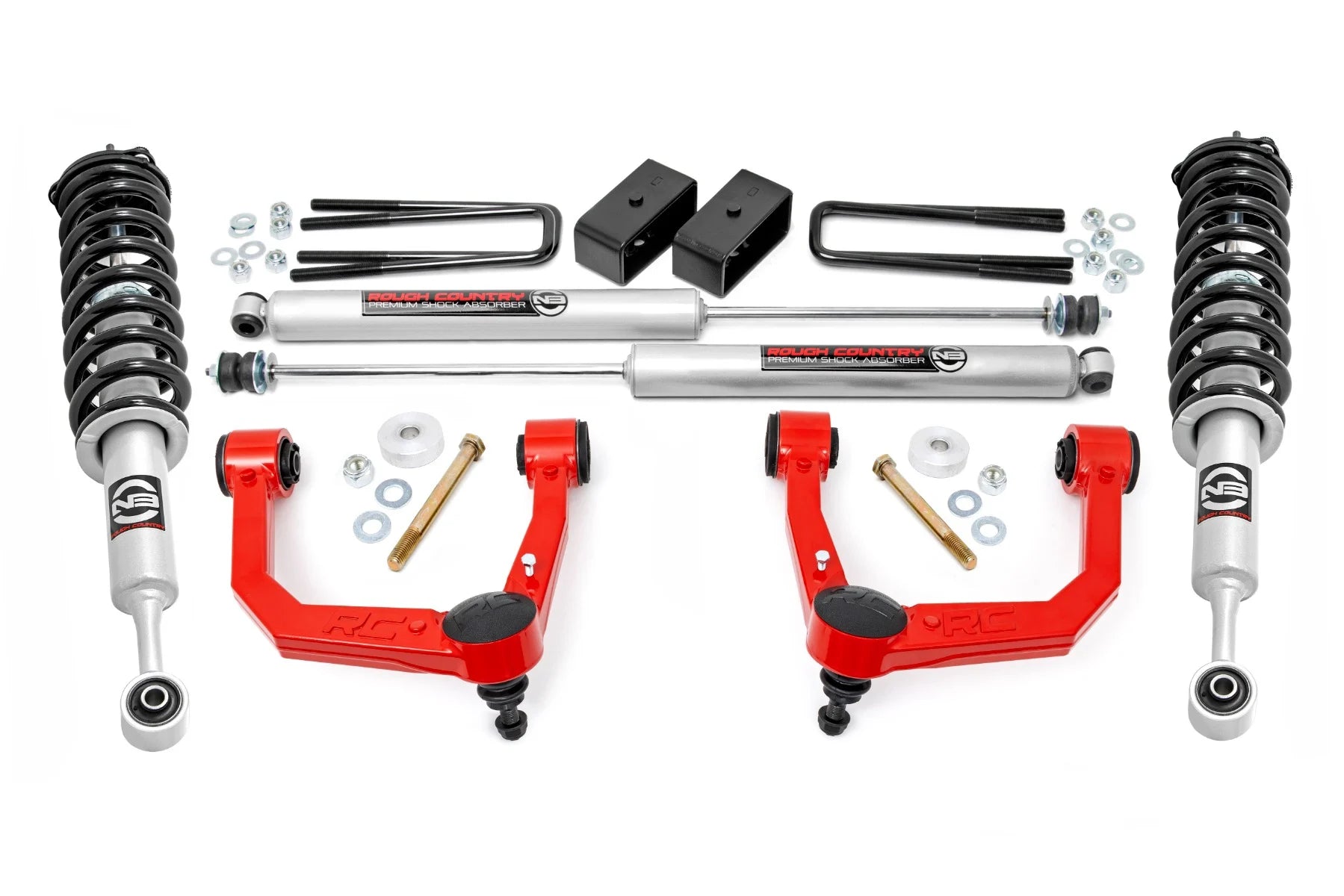
A practical build starts with a quality 2.5-inch suspension lift, matched shocks, and properly selected springs. That amount of lift generally provides the clearance needed for 35-inch tires while keeping the center of gravity more reasonable than a taller setup. It also avoids the common mistake of installing a big lift just because bigger sounds better.
The suspension package should include springs designed for the Jeep's actual weight. A soft-top Sport with no accessories needs different spring rates than a hardtop Rubicon carrying a steel bumper, winch, full-size spare, cargo gear, and roof-mounted accessories. Springs that are too soft sag under load. Springs that are too stiff can make the Jeep feel bouncy or rough when it is unloaded.
Matched shocks matter just as much. Good shocks control how the Jeep reacts after a bump, during braking, and through turns. They are not just there to make the lift kit look complete. A properly valved shock can make a lifted Jeep feel composed instead of floaty, especially with heavier 35-inch tires.
Build the Suspension Around the Whole Jeep
Lift height is only one part of suspension geometry. Once a Jeep is raised, the angles of the control arms, track bars, steering components, and driveshafts change. A quality installation addresses those changes instead of hoping an alignment alone will fix them.
For this 2.5-inch build, adjustable front and rear track bars are a smart addition. They re-center the axles under the Jeep after the lift. Without them, the Jeep can sit slightly offset, which may be subtle from the driver seat but obvious when you look at tire position under the fenders.
Adjustable lower control arms can also improve the result. They allow the installer to correct caster angle, which has a direct effect on straight-line stability and steering return. If your lifted Jeep feels nervous, requires constant steering correction, or does not naturally return to center after a turn, caster and steering geometry deserve attention.
On some Jeep applications, geometry correction brackets or longer control arms make sense. Which option is right depends on lift height, intended use, and budget. Geometry brackets can be an effective choice for a moderate-height daily driver, while adjustable arms provide more tuning flexibility for a Jeep that will see harder off-road use.
A front driveshaft inspection is also part of doing the job correctly. Raising the vehicle can increase operating angles, particularly on certain Wrangler models. At a moderate lift height, the factory driveshaft may remain workable, but there is no universal answer. Check clearances and joint angles rather than assuming every Jeep needs the same upgrade.
Tires, Wheels, and Steering Finish the Setup
A 35-inch tire changes more than the Jeep's stance. It adds rotating weight, affects braking feel, can change shift behavior, and places more demand on steering components. Tire choice should match where the Jeep spends its time. An all-terrain is usually the best fit for a Jeep that sees regular pavement. A more aggressive mud-terrain can offer stronger traction in loose terrain but often brings more road noise, faster wear, and less predictable wet-road behavior.
Wheel backspacing is a critical detail. The right wheel fitment provides clearance between the tire and suspension components while keeping the tire from sticking excessively outside the fender. Too little backspacing can increase scrub radius and put extra load on steering parts. Too much backspacing can cause the tire to contact control arms or sway bar links at full steering lock.
For this example, the installer should cycle the suspension and turn the steering lock to lock before calling the job complete. Check for rubbing at compression, not just while the Jeep is parked. A tire that clears in the shop can still contact a fender liner, bumper edge, or control arm when the suspension moves off-road.
If 35s are the destination, re-gearing may be worth discussing. The factory axle ratio may feel acceptable on flat roads, but acceleration, transmission shift points, and towing performance can suffer with larger tires. Re-gearing is not mandatory for every owner, but it is one of the upgrades that can make a larger-tire Jeep feel like it was built that way from the factory.
Do Not Skip the Supporting Parts
A reliable Jeep suspension upgrade example includes the less glamorous components. Extended sway bar links help keep the sway bar operating in its intended range. Longer bump stops prevent the tires from contacting the body or suspension at full compression. Brake line slack must be checked through the suspension's full travel.
The steering damper is often misunderstood. A quality steering stabilizer can help control kickback through the steering wheel, but it does not cure loose ball joints, poor alignment, worn tie rod ends, incorrect caster, or death wobble. If a Jeep shakes violently after hitting a bump, diagnose the actual cause. Adding a heavier steering stabilizer may mask symptoms for a while, but it is not a repair.
For Jeeps that regularly see rocks or deep ruts, upgraded tie rods, drag links, and ball joints may be a worthwhile next step, especially with larger tires. For a mild daily-driver build, stock components in good condition may be enough. This is where a vehicle inspection matters. Buying every heavy-duty part available is not always the best use of the budget.
Installation and Alignment Are Part of the Upgrade
Suspension installation is not just bolting parts onto the Jeep. Springs must be seated correctly, fasteners need to be torqued at the proper ride height where required, and every moving component needs a clearance check. After the build is installed, the Jeep needs a professional alignment that accounts for its new geometry.
The alignment should address toe and caster, while axle centering and steering wheel position should be verified during the process. A centered steering wheel is more than cosmetic. On many Jeeps, it affects how the electronic stability control system interprets steering input.
After a few hundred miles, re-torque suspension and steering hardware. New components settle, and hardware can relax after its first heat cycles and road use. This quick follow-up step helps protect the investment and catches small issues before they become expensive ones.
When a Smaller Lift Is the Better Choice
Not every Jeep needs 35s and a 2.5-inch lift. A 1.5- to 2-inch leveling or suspension lift with 33-inch tires can be an excellent setup for owners who mainly want better appearance, mild trail capability, and reliable daily driving. It usually costs less, retains more factory-like handling, and puts less strain on drivetrain and steering components.
On the other hand, an owner planning difficult trails, larger tires, heavy armor, or a winch should build with those future changes in mind. Replacing undersized springs, shocks, and steering parts twice costs more than planning the complete direction from the start.
At Audio Jam, a Jeep lift and tire package can be planned around how you actually drive, not just how the Jeep looks in a parking lot. Bring in your tire goal, accessory plans, and budget, then build the suspension that gives your Jeep the clearance and control to enjoy every mile.